
 Search
 Account
 Basket


What is Metamerism?
Metamerism is the word used to explain when the colour of two samples match under one set of conditions but no longer match when one of the conditions changes.
Metamerism is a very common phenomenon and yet consumers do not expect the colour to change. It is therefore very important to ensure that components of a product which may be manufactured by different suppliers or in different materials actually match under multiple conditions.
This is especially true with a car interior for example, where polymer resins, painted and coated surfaces and dyed fabric or leather all should match. Likewise a suit where the jacket and trousers should match is under the control of the brand or retailer. Products should be viewed under a number of light sources and at multiple angles in a light booth before they are approved for use.
Unfortunately, retailers have no control over a customer bringing an unrelated item on a shopping trip to match the colour of an item they need to buy. This often occurs, for example, a hat to match a wedding outfit or a cushion to match curtains. The customer is then only making a judgement on the colour in one set of conditions.
There are 3 distinct types of Metamerism dependent upon which change in conditions causes the change in colour:
1. Observer Metamerism
Two samples match in one set of conditions with one observer but no longer match when the observer is changed. Each person perceives colour slightly differently, this is caused by variations in the eye such as different responses of the cone cells, yellowing of the lens or variation in the macular pigment.
2. Geometric Metamerism
Two samples match in one set of conditions but no longer match when viewed at different angles, distances etc.
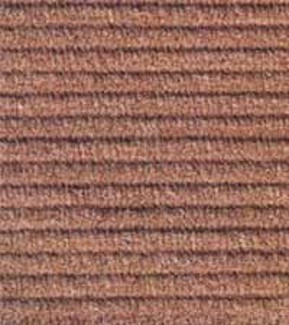
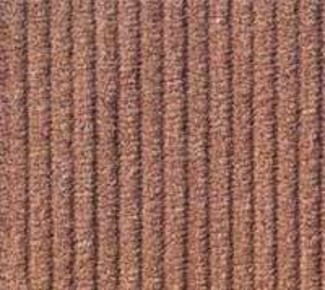
This is typically observed with 3d or textured items e.g. Corduroy fabric, pile carpet or towelling. It can also occur on two plastic surfaces with different textured surfaces.
One example of Geometric Metamerism is field-size metamerism which occurs because the relative proportions of the three cone types in the retina vary from the centre of the visual field to the periphery. The result is that colours matching when viewed as very small samples may appear different when viewed as a larger sample. To prevent this we recommend that similar-sized samples are viewed together. Preferably samples should be at least 5cm x 5cm in size to ensure the correct colour decision is made. Please don’t cut up your colour standard into many small snippets as it makes the job of colour matching much more difficult!
3. Illuminant Metamerism
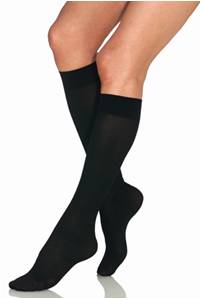
Two samples match in one light source but no longer match when the light is changed.
Have you ever chosen black tights to wear with a navy skirt or selected odd socks assuming that both are black when in fact one is navy?
This is a very common problem as under low levels of incandescent lighting such as a bedroom lamp the socks or tights may appear black! Under a different light source, for example daylight or a fluorescent lamp in your office, one is actually navy.

All light sources have a spectral content. Natural sunlight is made up of all possible colours (think of the rainbow effect when it shines through raindrops), but other light sources may not have such a complete spectrum.
A typical fluorescent store light has three peaks of light which correspond to the Red, Green and Blue cones in your eye. Whereas incandescent bulbs mainly emit light in the orange and red area of the spectrum which gives it the characteristic warm orange glow.
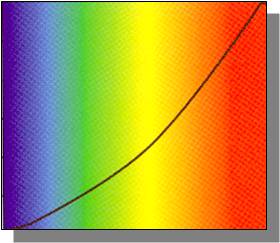
Image: Tungsten Filament (F) lamps
Unfortunately, lamps which do not emit light of a particular colour cannot illuminate and render colours in that colour area. It can be difficult to distinguish between Black and Navy socks under lights with small amounts of blue wavelengths!
Neutral colours
Neutral colours such as grey and khaki are notorious for exhibiting metamerism. Typically they are coloured with a combination of 3 different dyes or pigments (yellow, red and blue). It is relatively easy to match a colour under one light source, but more difficult to match under several different lights. The spectral reflection curve of the mixture may be significantly different from the spectral reflection curve of the original standard. Therefore, under a different light source with a different spectral distribution the colour will no longer match.
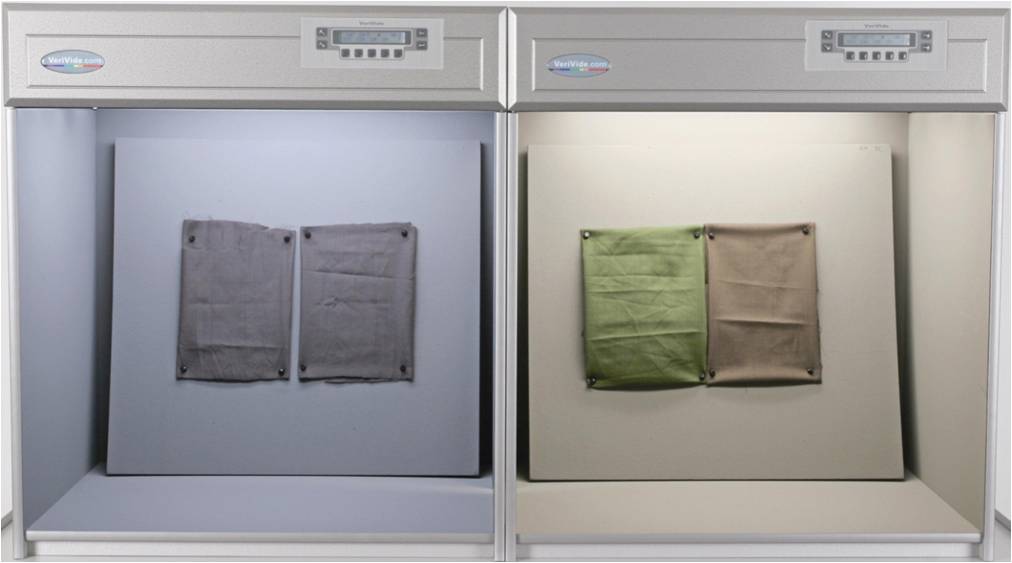
Image: Colour assessment of samples under D65 (left) & 840 (right) illuminant in VeriVide’s Light Booths
Update!
Our website provides further information on the variety of standardised light sources available. Lighting in both domestic and home environments has changed to LED in recent years. Do you know how your product appears under different lights?
Futureproof your product development by assessing colour under multiple LED settings. The new UltraView Light Booths contain a minimum of 8 light sources, including several store light LED options. Use to check products for colour under any light to prevent metamerism.
Contact Adam on sales@verivide.com to find out more.