 Search
 Account
 Basket
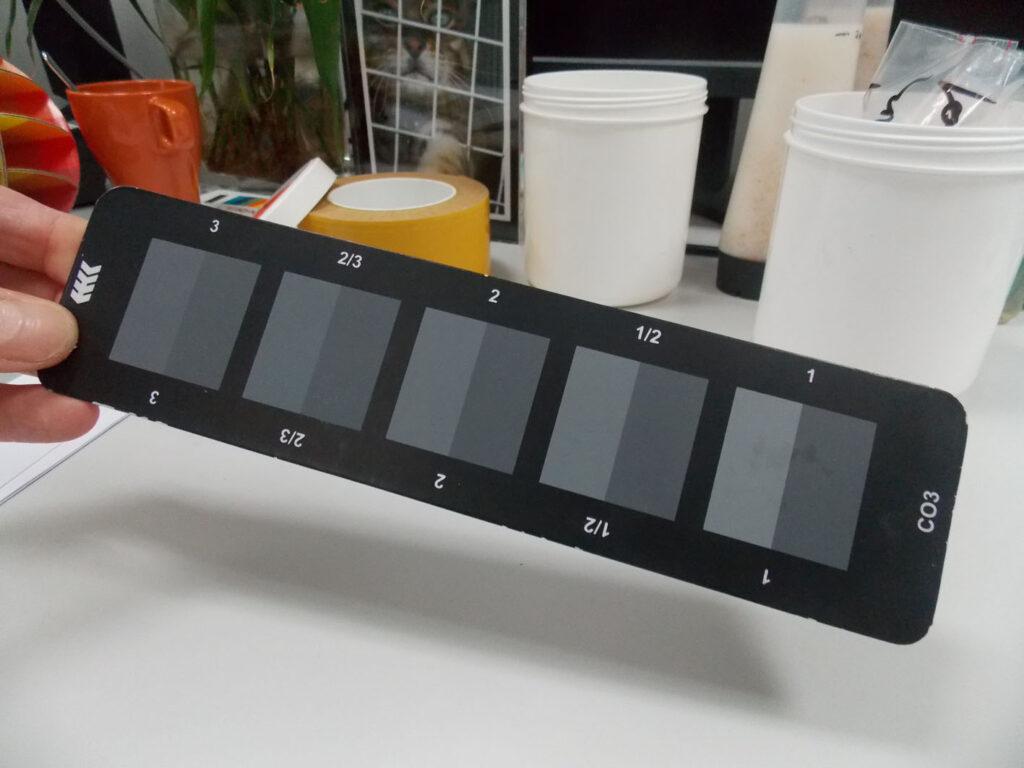


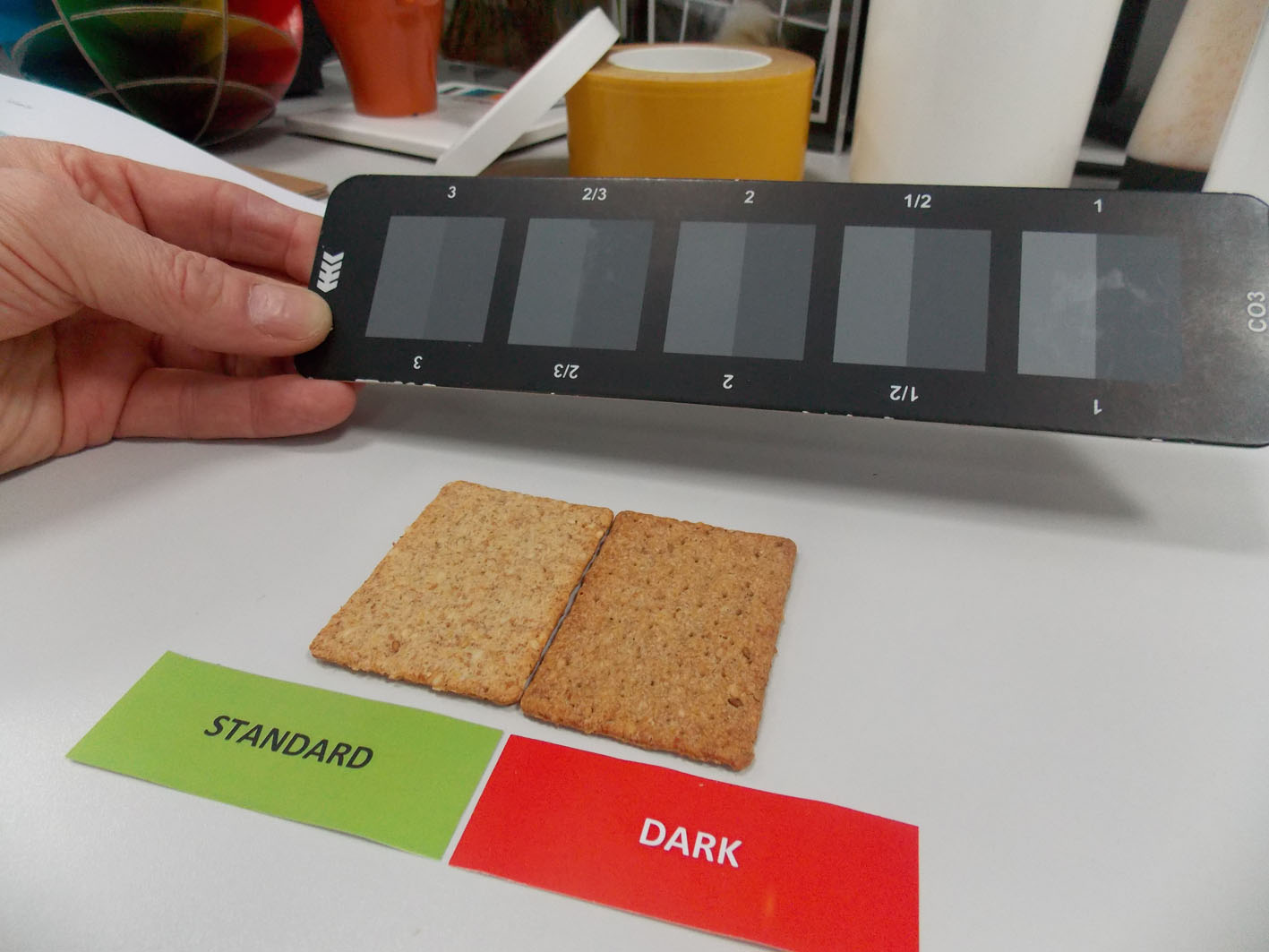
The ISO grey scale Change in Colours, is a widely recognised and used method within industry. The colour change of products can be compared and graded, the variations are placed on a scale that ranges between 1- 5 – where 1 is bad and 5 is good.
DigiEye software applies the ISO grey scale to colour difference, particularly for food.
How does the process work?
The process is fairly straightforward. First, a picture is taken of the product, for example, a packet of biscuits. Using DigiGrade Software, the colour difference is converted to a simple grey-scale grading. This enables individual biscuits to be compared to the scale. A big difference in colour between the biscuits produces results placed nearer the start of the scale. However, if there is little to no variation, results will be placed nearer the end of the scale.
The biscuits must be imaged in a controlled environment because external factors (such as the light source) can impact the end results. This is why when we go through with this process, we will take the initial photo with our DigiEye system.
What is deemed acceptable on the scale?
Results between grades 3 and 5 are acceptable. However, if the products are graded nearer to the beginning of the scale, between grades 1 and 3 this would be unacceptable.